
Professional Water Softeners: Complete Guide (price, capacity…)

Are you a professional looking for an effective solution against limescale and scale deposits? Do you want to learn more about water softeners? Prices, efficiency, advantages, disadvantages…
Water treatment specialists since 2006, we are regularly consulted by all types of professionals: hotels, restaurants, airports, refineries, property management companies, water parks, etc.
Our experience and global market overview allow us to meet the most complex demands.
On this information page, we will cover the following points:
- Why should you use a water softener?
- Why should you NOT use a water softener?
- And what is never told about the real characteristics, advantages and disadvantages of these systems…
Without further ado, let us dive into the subject.
Why use a professional water softener?
We will first examine the reasons why you should treat your water with a salt softener, whether you are in the hotel, restaurant, agricultural or industrial sector.
1 – Protection against high water hardness
So-called “hard” water is water loaded with calcium and magnesium ions. These ions are responsible for the limescale and scale that damage water networks.
Water hardness is measured in PPM (Parts Per Million) but the most commonly used unit is the French degree (degrees f or fH).
The term “TH” (Hydrotimetric Title) is often used to designate water hardness.
Abroad, there are other units of measurement (the German degree GH, the English degree e) and it is important to make the appropriate conversions.
When hardness exceeds 30 degrees f, it is strongly recommended to treat the water to protect your installations.
2 – Protection of your equipment
Hard water is the leading cause of equipment failure. Scale accumulates on heating elements, pipes and valves, reducing their lifespan and increasing energy consumption.

2 – Advantages of professional softeners
The first advantage is the increased longevity of your equipment.
If you have a professional kitchen, a commercial coffee machine, washing machines, water heaters or any other water-using appliance, limescale treatment greatly reduces the risk of malfunction.
Without treatment, scale builds up in flush mechanisms and on boiler heating elements, which is often the number one cause of breakdowns.
By investing in effective water treatment, you are protecting your installations in the long term.
You will also save on maintenance: you will not need to call a plumber to replace a heating element or drain a hot water tank.
If you are in the hotel, laundry or restaurant sector, softened water also improves the quality of cleaning and reduces detergent consumption.

Disadvantages of professional water softeners (+ effective alternative)
The salt softener has its advantages, but also its disadvantages. Below is a non-exhaustive list of negative points, to be weighed against the constraints related to your activity: a municipal swimming pool naturally does not have the same needs as a food processing company, or a refinery for example.
1 – Non-potability of water (and legal constraints)
The first point to consider when planning the installation of a water softener is the potability of the water and the resulting legal constraints.
Since water softening involves a chemical modification of the water, it is strongly advised not to consume it – and sometimes even prohibited.
This is the case for example in the hotel industry, where softened water cannot be used for drinking or cooking. A separate network must therefore be planned for drinking water.

2 – Significant maintenance (costs and time)
The second element to consider is the maintenance of your softener.
Maintaining a professional water softener represents a significant financial cost, but also in terms of time.
Indeed, regular maintenance by a plumber is necessary.
Regular maintenance is important as the softener contains wear parts and electronics. A breakdown could be highly damaging.
Also consider the consumables (salt, filter, resin) without which a softener cannot function.
3 – Installation (cost, network shutdown)
The installation of a softener requires a temporary shutdown of the network.
This systematically requires the intervention of a qualified technician and generates a cost that must be anticipated.
4 – Salt consumption
A professional water softener consumes significant quantities of salt. This consumable represents a recurring cost and requires regular restocking.
5 – Risk of bacterial contamination
The resin inside the softener can become a breeding ground for bacteria if not properly maintained. This is a real health risk, especially in the food industry or healthcare.

6 – Lifespan (wear parts, electronics)
The lifespan of a softener varies depending on the model chosen and the regularity of its maintenance.
We generally observe a durability of around ten years for this type of equipment.
The cause of this short lifespan is the presence of wear parts (filter, resin) as well as electronics in softeners: it only takes one faulty element to render the equipment obsolete.
7 – Not ecological (saline water discharge)
Softeners discharge salty water. From an ecological standpoint, this is a problem as this water requires additional treatment to avoid pollution (when it is not discharged into nature).
Today, there are no penalties for individuals or companies using water softeners, but the legal risk should not be ignored as authorities may tighten regulations in the future.
Technical characteristics of professional softeners
Knowing the advantages and disadvantages of a solution is certainly relevant, but it is also interesting to understand its technical characteristics to grasp how a salt softener works.
1 – Components of a salt softener
The three components of a softener are the brine tank, the exchange resin cylinder and the electronic control unit.
Ion exchanges take place in the resin – it is this that softens the water.
The electronic unit determines the frequency at which resin regeneration should occur.
Resin regeneration consists of rinsing it to clean it and allow it to continue functioning correctly, using salt water for this process.
2 – Hardness and sizing
Sizing a professional softener requires knowing the water hardness at the installation site, as well as the daily water consumption. These two parameters determine the required resin capacity and salt consumption.
3 – Flow rate
The flow rate of a professional softener is expressed in m3/h. It must be adapted to the peak consumption of the installation to avoid any flow reduction.
4 – Maintenance
Water softener maintenance consists of regularly checking the salt supply and making frequent and precise adjustments.
It is also necessary to clean the salt tank every 3 years and replace the resins.
A resin cleaning should also be planned annually.
If your softener has a pre-filter, you will need to change it approximately twice a year.
It is therefore important to plan the maintenance of your device, or to call in a professional who will take care of the entire process.
5 – Price
It is difficult to estimate the price of such a device as each network has its own specific needs.
But it is important to note that a professional softener costs significantly more than a domestic model – count on several thousand euros for the purchase, plus installation and annual maintenance costs.

What about other professional anti-limescale systems?
Salt softeners are not the only anti-limescale systems available. As a professional, you can also opt for CO2 technology, electromagnetic, or anti-scale oscillation systems…
1 – CO2 water softener (for professionals)
CO2 softeners have the advantage of being less polluting than conventional (salt) softeners.
However, they share most of the disadvantages such as: corrosion risks (red-brown water), regular maintenance, consumables (gas cylinders), installation, wear parts, etc.
2 – Professional magnetic anti-scale (and anti-limescale magnets)
Magnetic anti-scale systems use a magnetic field to modify the crystallisation of limestone. However, their effectiveness is disputed by many experts and they share most of the disadvantages of traditional softeners.

3 – Oscillation device against limescale (recommended)
Oscillation systems, at first glance, resemble magnetic systems, but they are not.
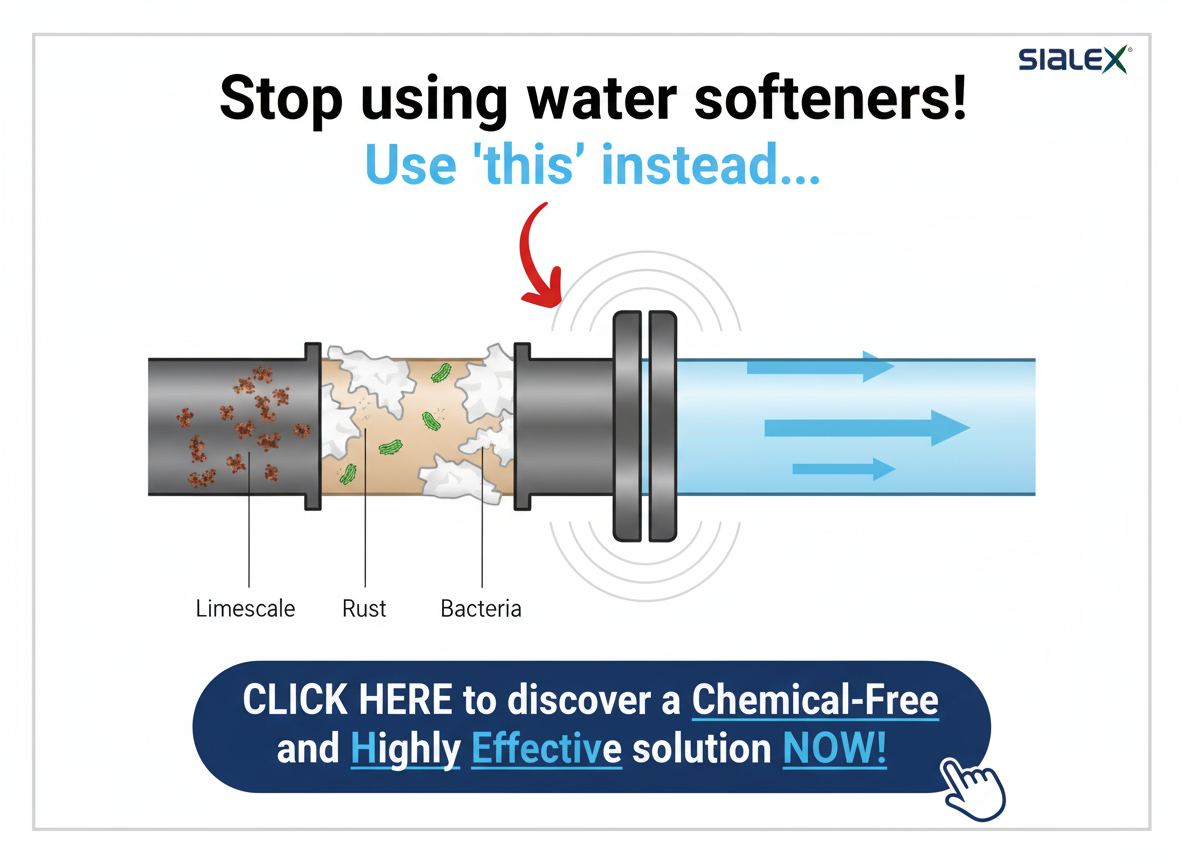
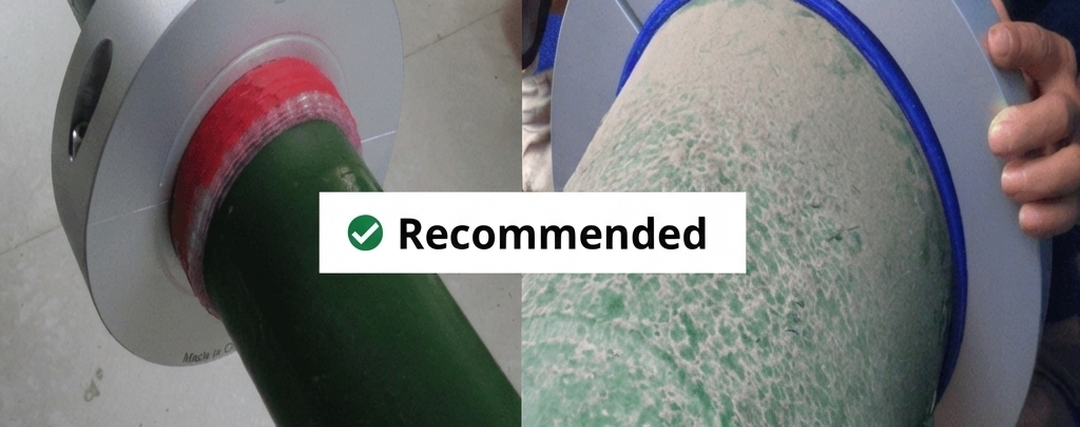
These devices are not magnetic. They are made of an alloy sensitive to micro-variations in temperature, generating very low frequency sound waves (oscillations) transforming calcite into aragonite.
These devices are the most efficient on the market: a durability of 15 to 20 years, no maintenance, and effective (including at extreme temperatures).
Click here to learn more about oscillation anti-scale systems.
Choose the professional Sialex anti-scale! (used with satisfaction by more than 10,000 users worldwide)
You now have a better understanding of water softening systems as a professional. As specialists in water treatment, we recommend the Sialex Ring oscillation system: no maintenance, no consumables, 15 to 20 years lifespan, and proven effectiveness.
Contact us for a free quote tailored to your installation.
Looking forward to working with you soon.
Yours sincerely.
