
What Are the Alternatives to a Water Softener?
Are you considering purchasing a water softener? But you want to take the time to explore the various existing alternatives to make sure you make the right choice?
You’re right!
Purchasing a limescale treatment can represent a significant investment, and it would be a shame to make the wrong one.
We have specialized in water treatment since 2004. We have already helped thousands of individuals, local authorities, and businesses choose a water treatment solution.
We therefore know the market very well and are able to present you with the various existing solutions.
On this page, we will review the following options:
- Salt-free softeners (e.g., CO2-based)
- Anti-limescale magnets
- Oscillation rings
- Filters, reverse osmosis systems, and others
After that, we will determine which alternative is best suited to your situation.
Without further ado, let’s dive in.
Salt-Free Water Softeners
One of the first things that comes to mind when talking about salt-free water softeners is the CO2 softener. Let’s take a look at what it involves.
1 – CO2 Water Softeners
The CO2 softener is installed like a traditional softener, on the water inlet of the infrastructure to be protected from limescale (homes, offices, factories…)
It must be plugged into a 220V outlet and connected to a CO2 cylinder, which is injected into the water to dissolve the limescale.
The principle is to lower the pH (hydrogen potential) of the water to make it acidic. We all know that lemon juice or vinegar are effective traditional remedies. Limescale is dissolved by the carbon dioxide, which causes it to break down.
2 – Corrosion Risks

The main danger of the CO2 softener is corrosion.
Indeed, this chemical treatment is calibrated for a specific water hardness level. Since hardness varies throughout the year, a decrease in hardness will cause corrosion.
Note: an increase in water hardness makes the CO2 softener ineffective.
In conclusion, we do not recommend this system, except in a few very specific cases.
Electromagnetic Water Softeners (Not Recommended)
One of the most popular alternatives to traditional water softeners is the electromagnetic softener. They are also known as magnetic softeners, anti-limescale magnets, or physical water treatment systems.
1 – How Anti-Limescale Magnets Work
Various models exist, and it would take too long to describe them all.
We will therefore make a general overview, omitting the specifics of each system, while explaining the common denominator to all of them.
A magnetic anti-scale device takes the form of magnets (or a coil) placed around the water inlet of the infrastructure to be protected.
The advantage of this method is that it does not alter the chemistry of the water.
The magnetic field generated by the magnets modifies the structure of the limescale, making it soluble. This means it is still present in the water, but does not turn into scale.
Pipes are therefore protected, and limescale residue (which you may find in the shower, for example) is very easy to remove.
2 – Why Do We Not Recommend Magnetic Softeners?
The main problem with magnetic softeners is their durability.
Users of this type of water treatment notice a decrease in effectiveness over time.
This is due to the decline in the magnetic induction of the magnets. Over the years, they lose « power », making them less effective.
If you really want to use a magnetic treatment, you will therefore need to:
- Choose one that is more powerful than necessary (to anticipate the drop in performance)
- Or replace it regularly, as soon as a drop in performance is noticed
Due to this drawback, we do not recommend this type of solution.
Oscillation Rings (Recommended)

Since CO2 softeners cause corrosion issues and magnetic treatments are not durable, what alternative do we recommend? Let’s find out right now with the oscillation ring.
1 – How Does an Oscillation Ring Work? (and Why Is It So Effective and Durable?)
An oscillation ring operates 100% autonomously.
The most recognized reference in this field is Sialex.
Sialex oscillation rings are made from a quartz and silicon alloy. This alloy generates oscillations thanks to micro-variations in ambient temperature. The oscillations act directly on the limescale present in the water.
The Sialex oscillation ring is just as effective as the previously mentioned alternatives, but has a much longer lifespan.
If you would like to know more, click here to access the Sialex Ring presentation page.
2 – The Advantages of the Oscillation Ring (Compared to Magnetic Treatment)
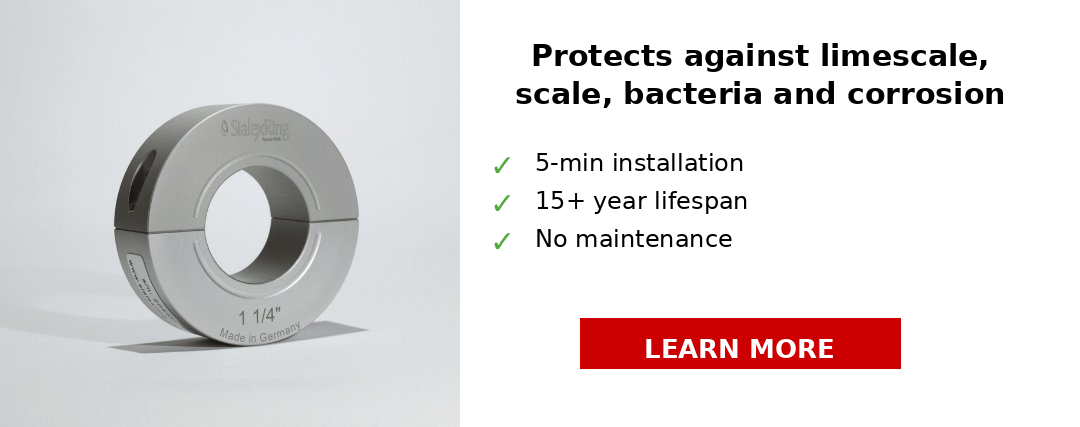
In addition to having a lifespan of over 15 years, the Sialex oscillation ring has several significant advantages.
Since it operates without electricity, it can be installed outdoors without any issues.
Installation can be completed in 5 minutes and requires no technical skills (except for industrial installations, where the intervention of a professional is recommended).
By comparison, over 10 years, the price of a Sialex Ring is 3 to 5 times lower than that of a salt-based softener.
Click here to discover the product and estimate the cost of installation.
Anti-Limescale Filters, Reverse Osmosis Systems, and Other Solutions
Even though we strongly recommend the oscillation ring, you may have heard about other solutions. Many of our clients ask us about anti-limescale filters, reverse osmosis systems, and a few other less common solutions.
Let’s take a look at what they involve.
1 – The Anti-Limescale Filter (Polyphosphate)
Some clients ask us about anti-limescale filters.
In most cases, we do not recommend this type of solution.
They are chemical-based and very restrictive because the water can no longer be consumed.
Furthermore, their effectiveness is lower than that of alternative solutions, their installation requires some work and technical knowledge, and the filter must be replaced regularly.
Individuals and the majority of professionals have no reason to choose an anti-limescale filter.
2 – Reverse Osmosis Systems
Reverse osmosis systems are intended for drinking water. Therefore, they cannot be placed on a general water inlet (due to their low output efficiency).
They provide no protection for your installations against scale and limescale (as softeners and oscillation rings would).
A reverse osmosis system is generally installed on a tap to purify water. It is also a device widely used by aquarium owners, to provide fish with demineralized water free from metals and all types of deposits.
In addition to not protecting installations, a reverse osmosis system has very low efficiency: it typically takes 3 liters of water to produce 1 liter of osmosis water.
3 – Other Solutions (Electrolysis, Chemical Systems, etc.)
Other solutions exist, although they are less widespread.
This is the case for electrolysis water treatment, which has a certain effectiveness but is subject to many constraints. This solution is therefore reserved for very specific situations.
Other chemical systems also have a certain effectiveness but present several problems, such as the inability to drink the treated water.
What Is the Best Alternative to a Water Softener?
We have reviewed the following solutions:
- CO2 water softeners (corrosion issues)
- Electromagnetic treatments (unstable durability over time)
- Oscillation rings (our recommendation)
- Anti-limescale filters, reverse osmosis systems, and other solutions (relevant in specific cases)
As you will have understood, the solution we consider the best among these is the oscillation ring.
We have specialized in water treatment since 2004, and in 99% of situations, the oscillation ring is the most appropriate answer.
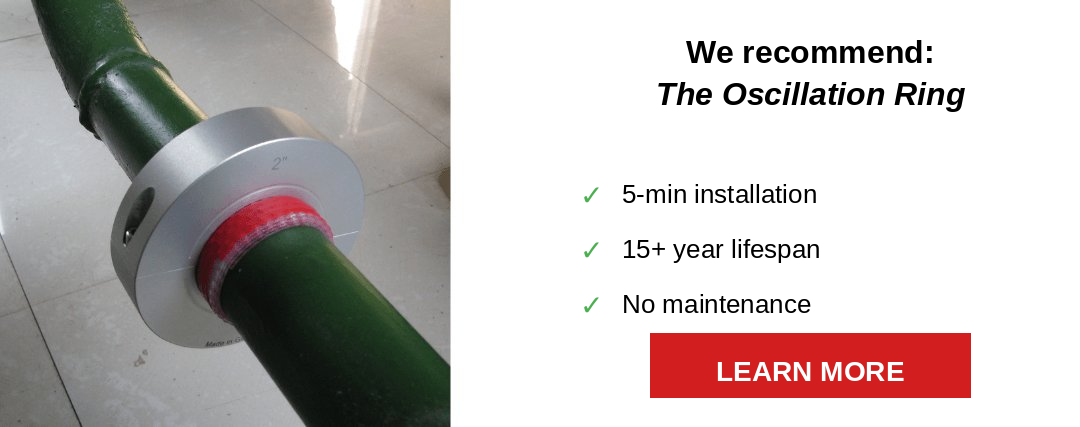
The Sialex Ring has comparable effectiveness to competing solutions, but:
- Can be easily installed in 5 minutes
- Costs 3 to 5 times less
- Requires no maintenance
>> We invite you to visit the Sialex Ring presentation page by clicking here.
You will find all the information about this solution that will solve your scale and limescale problems.
Please know that you can ask us your questions at any time if needed.
